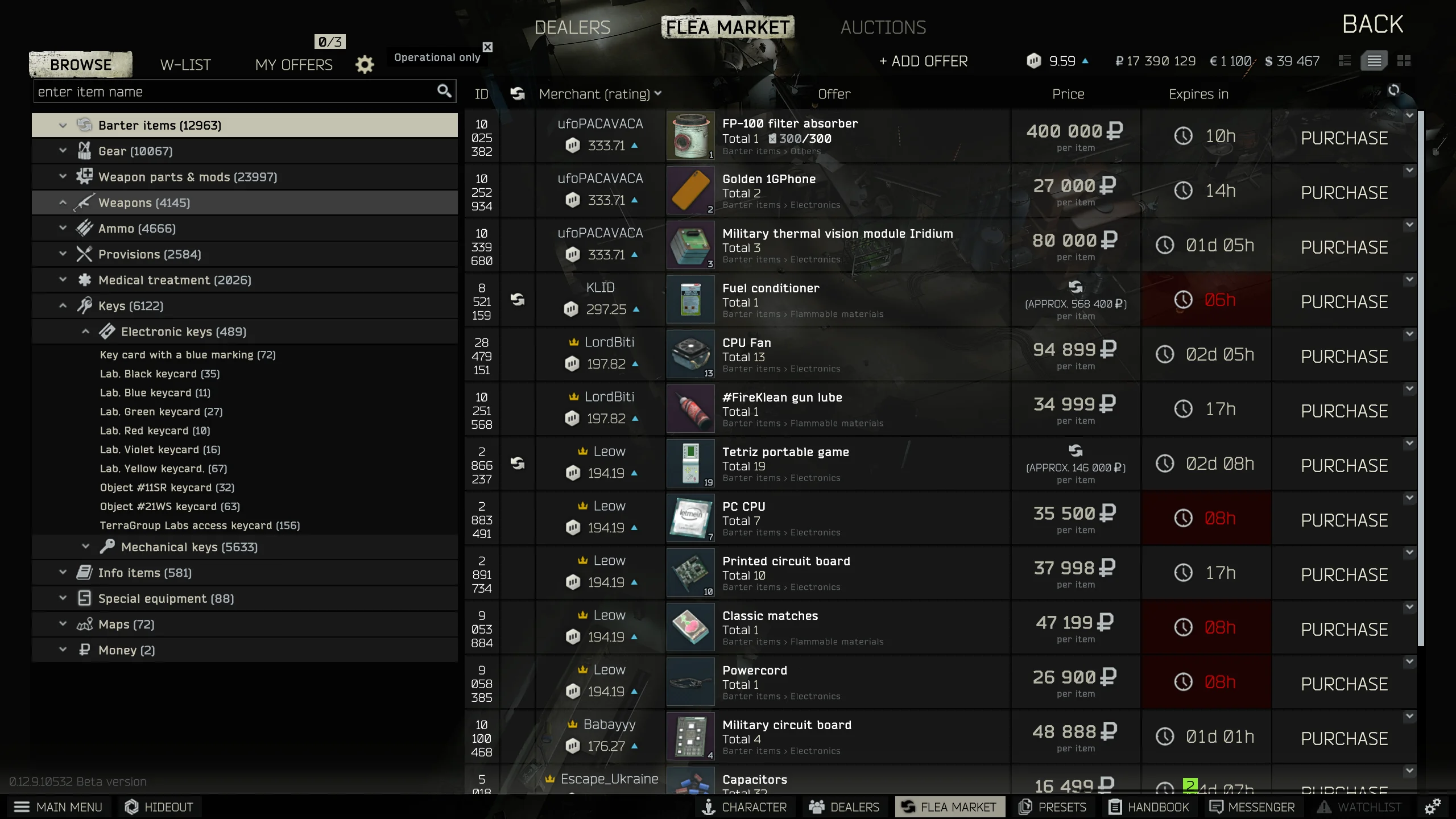
The scav case is the hideout module where you hand over roubles, moonshine or an intelligence folder and get a box of random loot back some time later. Run it often and the returns pile up: food, barter items, ammo, the odd valuable, and a lot of small stuff.
That pile is money sitting in your stash. Most players know the scav case is worth running, but far fewer have a plan for what comes out of it. This guide covers how to sort the returns, when to sell to a trader and when to use the flea market, and how to keep the module earning without the selling turning into a chore.
How the scav case works
You pick what to put in, start the run, and wait. When the timer finishes, the case holds a set of random items. The input you choose affects what kind of loot you tend to get back and how long the run takes, with the more expensive inputs generally aimed at better returns. The exact options and timers are shown in the module itself, and they change between patches, so check there rather than relying on an old list.
Returns are random. One run might give you something worth far more than you put in, and the next might be a stack of cheap food. Judge the scav case over many runs, not one.
Why it piles up
Each return is a handful of unrelated items. Pricing them means opening the flea market, searching each one, checking the lowest offers and deciding what to ask. Doing that for every item in every case gets old quickly, so most players either dump everything on a trader or let it sit in the stash.
Letting it sit is the worst of the three options. Stash space is limited, and a stash full of small unsorted items makes it harder to find your gear and harder to see what is worth keeping. It also means the money you could have made is not doing anything for you.
Trader or flea?
Traders pay a fixed price straight away, with no fee and no waiting. The flea usually pays more, because other players pay closer to what the item is worth to them. For a lot of scav case returns, the gap is big enough to be worth listing even after the flea's listing fee.
Items from the scav case count as found in raid, so they can go on the flea like anything you carried out of a raid yourself. Found in raid (often shortened to FIR) is a tag the game puts on items you brought out of a raid, as opposed to items you bought. Many items need that tag to be listed on the flea, and some quests ask you to hand over FIR items.
A simple rule: compare the flea price with the best trader price. If the flea pays noticeably more after the fee, list it. If it does not, or the item barely sells, take the trader money and free up the space.
The flea charges a fee when you post an offer. The fee goes up the further your asking price sits above what the game considers the item's base value. That means overpricing an item does more than slow down the sale: it can also eat into your profit before anyone buys it.
The game shows you the fee before you confirm the listing. Get into the habit of reading it. If the fee takes away most of the difference between the flea price and the trader price, the trader is the better deal.
Some items cannot be listed on the flea at all. The game will not let you add them to an offer, so those go to a trader or stay in your stash.
Sorting a return, step by step
When a case finishes, run through the items in this order.
1. Check for anything you need. Look at your active quests and your hideout upgrade requirements. A scav case item that finishes a quest or an upgrade is worth more to you than to any buyer.
2. Keep what you will use. Useful food, drink, medical items and ammo for guns you run can stay, as long as you will use them soon.
3. Price the rest. For each item, compare the flea price with the best trader offer.
4. List the winners on the flea. Undercut the lowest current offer a little so yours is near the top and sells quickly.
5. Sell the rest to traders. Cheap items, slow sellers and anything where the flea gap is small go to whichever trader pays most.
6. Start the next run before you close the hideout.
A worked example
These numbers are made up, only to show the math. Say a return contains a barter item that the best trader buys for 20,000 roubles. The lowest offer on the flea is 45,000. You list yours a bit under that, at 44,000, and the fee screen shows 3,000. If it sells, you take home 41,000, about twice the trader price. That one is worth listing.
Now say the same return has a small item a trader buys for 4,000, while the flea's lowest offer is 6,000 and the fee would be 1,000. After the fee you would make a little more than the trader pays, but it takes an offer slot and might sit for a while. On a busy day, that one goes to the trader. The real prices and fees in your game will be different, but the comparison works the same way.
You can only have a limited number of flea offers up at once. When your slots are full, a new item has to wait until one sells or you cancel one. This is why it pays to save your slots for items with a real gap over trader prices, and to send small, cheap items to traders.
Prices also move. Popular items can drop when many players are selling the same thing, and rise when a quest or hideout upgrade makes them suddenly in demand. If an item has been sitting unsold for a long time, check whether you are still near the lowest offer, and either lower your price or take the trader money.
Early wipe vs late wipe
Early in a wipe, money is tight and many players are still working on quests and hideout upgrades. Barter items and quest items from the scav case often sell well because so many people need them. It is also when keeping the right items for your own progress matters most, so check your quest list before you sell.
Later in the wipe, most players have finished their hideout, and demand for some items drops. Flea prices for common barter items tend to fall, and the gap over trader prices can shrink. You will find more items where the trader is the sensible choice, and the scav case becomes more about steady income than lucky drops.
Note that the flea market itself has a player level requirement before you can use it. If you have not reached it yet, traders are your only outlet, and it is worth holding onto a few higher value items until you can list them.
Common mistakes
Dumping everything on a trader. It is fast, but you leave real money behind on the items with a big flea gap.
Listing everything on the flea. Cheap items take slots, carry a fee, and sometimes do not sell. Not every item is worth the effort.
Pricing too high. A high asking price raises the fee and pushes your offer down the list, so it sells slowly or not at all.
Selling quest items by accident. A quick look at your quest list before selling saves you from buying the same item back later at a higher price.
Leaving the case idle. Every hour the module sits finished and uncollected is an hour it is not earning.
Keep the case running
The scav case only earns while it is working. Collect each return and start the next run as soon as it finishes, or the module sits idle.
Keep a small supply of whatever input you prefer in your stash, so you are never stuck unable to restart it. Checking the case at the start and end of each play session is an easy habit that keeps it busy most of the time.
Quick checklist
Collect the finished return and start the next run.
Pull out anything needed for quests or hideout upgrades.
Keep the items you will use soon.
Compare flea and trader prices for the rest, fee included.
List the items with a clear gap, slightly under the lowest offer.
Sell the rest to the best paying trader.
FAQ
Are scav case items found in raid? Yes. That is what lets you list them on the flea and use them for quests that need FIR items.
Which input is best? It depends on your budget and what you want back. The more expensive inputs generally aim for better loot, but returns are random either way. Try a few and judge them over many runs.
Why did my flea offer not sell? Usually it is priced above other offers, or demand for that item is low right now. Check the current lowest price and adjust.
Should I sell on the flea before I reach its level requirement? You cannot. Until then, use traders and keep anything valuable for later.
If listing item after item is what keeps your scav case loot stuck in the stash, it is the kind of repetitive work a tool can take off your hands. Tarkbot's flea selling mode, for example, lists items straight out of a scav case at a price just under Tarkov's own suggestion, but the sorting decisions above are still worth making yourself.